
Published 7/27/26
Summer is road trip time! The thought of hitting the open road to explore everything an American summer has to offer is irresistible. But if you have kids, you know that a whole lot more than just “hitting the road” has to happen to prevent disaster. I’m not a travel expert, but I have taken many trips with children of all ages, as well as older generations. Here are a few things I have learned over the years:
Get the Car Ready
There’s something about a clean vehicle that sets the tone for the trip. If the minivan is already trashed, it’s going to be a rolling dumpster by the time you get home from the trip. Take an hour- yes, an HOUR– to excavate the french fries under the seat, throw away the trash, and vacuum every bit of the interior. Wipe down all the hard surfaces, including that dusty dashboard. Get the remnants of winter out of the center console and refill it with bug spray and sunscreen (you don’t need an ice scraper in July, I promise).
If you have kids in car seats, take the seats out of the car and clean them. You might even find things you haven’t seen in a while. If your kids are outgrowing their current seats or they are getting worn out, now is a great time to upgrade or size up.
Now that the car is clean, stay committed to keeping it that way. Scan for trash at every stop. Gas stations and rest stops always have trash cans, so use them!
Emergency and Safety Essentials Checklist
Before hitting the road, make sure you have an easily accessible emergency kit packed in the vehicle:
- First-aid kit (bandages, antiseptic wipes, pain relievers, motion sickness meds)
- Jumper cables or a portable battery jump-starter
- Tire pressure gauge and spare tire tools
- Flashlight with extra batteries
- Extra water bottles and non-perishable emergency snacks
Plan Things to Do in the Car
- Set screen time boundaries: iPads and other screens have a time and a place, but they shouldn’t be used all the time in every place. Teach kids to look out the window—by the time they are teenagers, they might even know how to occasionally navigate without GPS.
- Pack quiet toys and books: Give kids small, quiet toys and books for the car. Favorite toys of my kids have been travel Etch-a-Sketch-style toys, small drawing kits, Rubik’s cubes, and other “puzzle” games. If you have a child who loves “imagination” play, small dolls, animals, or action figures will keep them busy for hours. Getting a few new toys at the dollar store or a garage sale just for the trip adds a sense of novelty and build excitement for the journey.
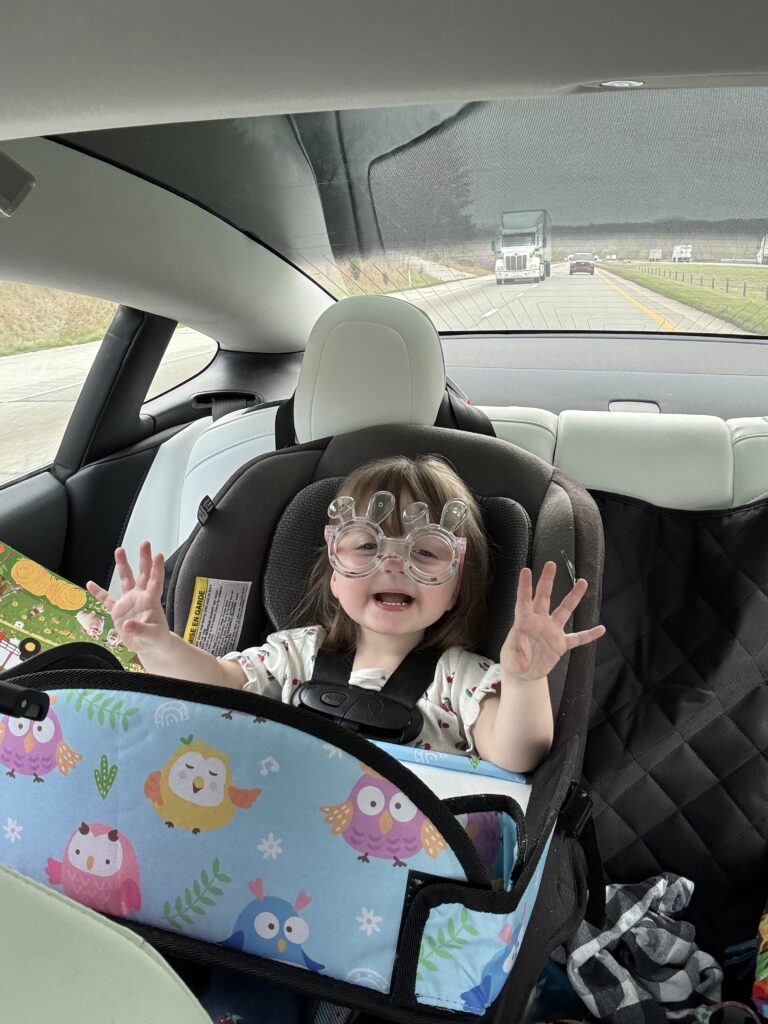
- Minimize drama with separate activities: If your kids play well together, try travel games. But if games are going to cause fighting and stress out the driver, plan intentionally separate activities to keep the drama to a minimum.
- Bring car-friendly reading material: If your kids can read in a moving vehicle without getting carsick, take advantage of it. Choose books related to where you are going, or bring their favorite stories. For kids who do struggle to read when moving or for younger kids, audiobooks are also a great option.
- Use media to teach about the destination: If you are using screens, choose a movie or documentary that teaches about where you are going. Your local library likely has tons of free, downloadable options.
- Traveling with multi-generational family: Does Grandma have something to do? Think about older adults who may be traveling with you and things they can do to stay engaged with the kids and enjoy the journey to the destination.
Food, Snacks, and Hydration
- Individual snack bins: Give each child their own small container with pre-portioned snacks for the day. This eliminates arguments over sharing and prevents them from eating everything in the first hour.
- Choose low-mess foods: Stick to snacks that don’t melt, crumble excessively, or leave sticky fingers (e.g., pretzels, dried fruit, cheese sticks, or grapes).
- Accessible mini-cooler: Keep a compact cooler within reach of a front passenger filled with water bottles and chilled snacks so you don’t have to stop every time someone gets thirsty.
Plan to Stay Organized at Your Destination
Where do you put your stuff when you arrive? One strategy I have used is to send the kids and a responsible adult somewhere (pool, arcade, ice cream shop, etc.) while I get the room organized. If it’s an unpacking free-for-all, things will get lost and broken. If I get thirty minutes alone, I can create “zones” for each kid to keep their space organized, and I can set up my own stuff for the duration of the trip.
Pro-Tip (The Landing Zone): No matter how big your accommodations are, it is important to have a “landing zone” for important things like room keys, car keys, phones, and wallets. Best-selling author and Emmy Award-winning television producer Paula Rizzo is a frequent traveler and an expert on organization and using lists. She recommends a luxury “valet tray” for staying organized in your hotel room. CLICK HERE for details. If you don’t have a Bloomingdale’s budget, You can use a lightweight tray or dollar store container as your designated spot. Let everyone in your group know that this is the ONLY place for room keys, tickets, wallets, and other essential items.
Plan for Your Return Home
Ok, you planned for the ride to your destination, but the real test of your patience and nerves is the ride back. Plan for the trip home just as carefully as you planned for the ride from your drive out. Here are a few tips:
- Take a different route: Make a few quick stops at new places along a different path or drive at night while the kids sleep if it’s safe for the driver.
- Save surprise brand-new toys: Save a couple of surprise coloring books or gadgets specifically for the return leg to curb some boredom and whining when everyone is overstimulated and ready to sleep in their own bed.
- Do laundry before returning: If possible, wash your clothes at the rental, hotel, or a laundromat before you get home. Then, all you have to do is put them away when you get home, instead of tackling “Mt. Wash-more” as soon as you walk in the door.
- Schedule a buffer day: Give yourself a day, or even a half-day to recover before jumping back into work, school, or other obligations. Give your family time to sleep in a little, eat some healthy food, and get acclimated to post-vacation real life.
Have a great road trip and make some beautiful memories!
Story by Jennie McClelland for BlueWaterParent.com.


Click here for ideas for Easy Road Trips from the Blue Water Area.
Why travel with kids? Click here to read about the importance of travel.